Knowing Risk Project conducts research dissemination symposium
Posted By
James MphandePosted on
26th May, 2026
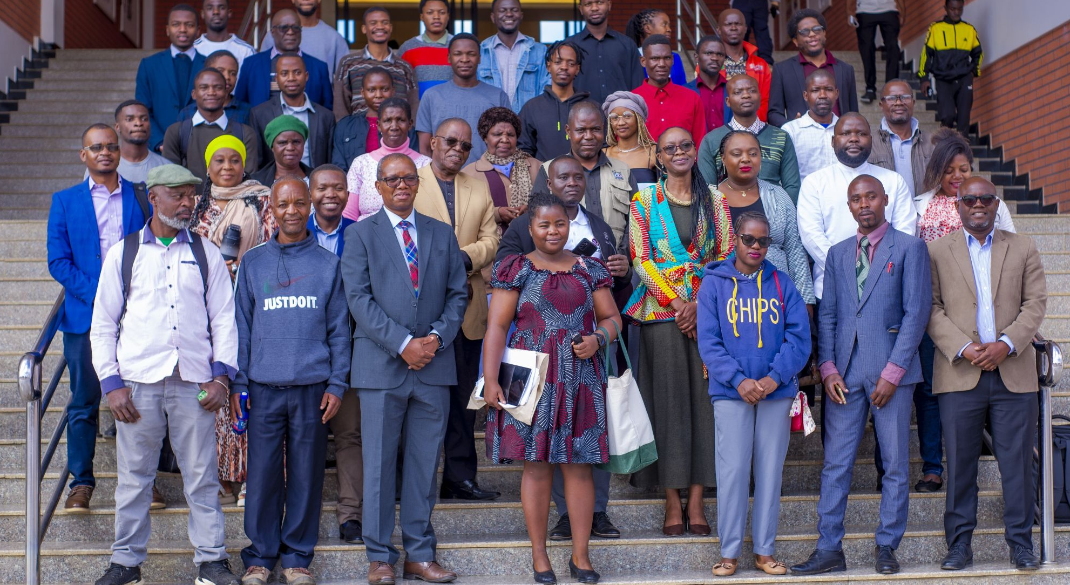
The Knowing Risk Project on May 21, 2026, conducted a research dissemination symposium at the Malawi University of Science and Technology (MUST Library Auditorium in Thyolo and online.
It was held under the theme “The Power of Voice-Effective Warnings for All”.
The symposium, organised and chaired by Dr Marion Chirwa Kajombo, provided expert feedback on the findings from the research on Knowing Risk: Embedding Emergency Warning and Environmental Monitoring Systems in Community Environmental Histories and Citizen Science.
The project was conducted by MUST in partnership with University of Glasgow (Scotland) and University College London’s Early Warning Centre, with research sites located in Blantyre, Chikwawa, and Dzaleka in Dowa.
The symposium was attended in-person by a representation of research participants and Citizen Scientists from the study sites to present research findings and collect feedback on the presentations, and by online registrants.
In his welcoming remarks, Dean of Global Engagements for Sub Saharan Africa at University of Glasgow and a faculty member at MUST, Associate Professor Mwapatsa Mipando, welcomed participants, emphasizing the collaborative research project’s role in translating research into actionable life-saving community solutions.
His remarks were reiterated by Associate Professor Wilfred Kadewa, the MUST-based PI on Knowing Risk, who presented an overview of the project, and by Professor Deborah Dixon, the University of Glasgow-based PI.
In the morning session, Grace Chilongo (Research Assistant) showed how low-cost Citizen Science activities can enhance design and implementation of warning activities, as well as understandings of environmental risk and vulnerabilities.
Innocent Sandram’s (Research Assistant) analysis of selected policy documents in use in Malawi showed the missing “voices” in Early Warning Systems (EWS) documented knowledge in communication and engagement with systems intended to support preparedness and resilience.
Steven Gondwe (GIS Technician), using participatory GIS, indicated how communities can understand risk provided by remotely sensed environmental data.
And finally, Dr Chirwa Kajombo (Co-PI) illustrated the challenge of translating Early Warning knowledge systems across languages and cultures in the project.
She also proposed best practices that can be used to embed environmental histories, lived experiences and scientific knowledge.
In the afternoon session, Sandram and Dr Chirwa Kajombo convened a panel discussion for in-person attendees on lived experiences of Early Warning signs, communication and imbedding knowledge systems.
In addition, a MUST student innovator, Syton Mphaka, showcased his Bluetooth-triggered flood monitoring gadget.
Participants showed interest in the gadget, with some indicating it will help overcome current mobile network and electricity challenges that affect systems currently in use.
The Knowing Risk Project is funded by The British Academy, and navigates the links between community-based expertise and/or indigenous knowledge systems and the design and implementation of hazard warning systems and policies in Malawi.
Previous