MUST team advances ecological condition mapping at SA workshop
Posted By
James MphandePosted on
26th May, 2026
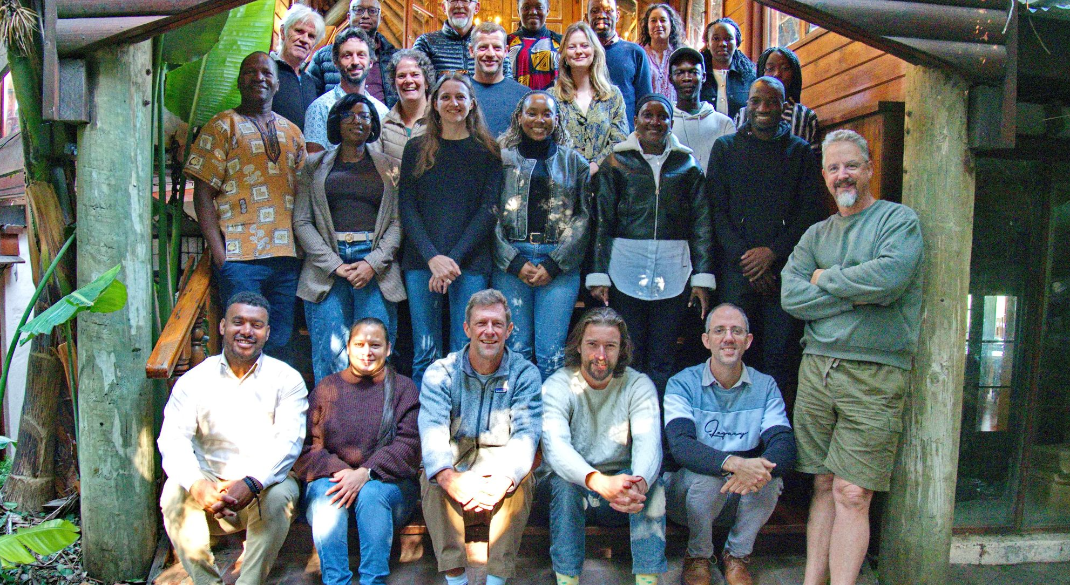
A delegation from Malawi, led by the Malawi University of Science and Technology (MUST), participated in the biodiversity regional workshop on Ecological Condition Mapping held from May 19 and 21, 2026 in Cape Town, South Africa.
The workshop was hosted by the South African National Biodiversity Institute (SANBI) and University of Cape Town (UCT) under Spatial Biodiversity Assessment, Prioritization and Planning (SBAPP) project, funded by Agence Française de Développement (AFD) and Fonds Français pour l’Environnement Mondial (FFEM).
Malawi’s delegation included Dr Tiwonge Mzumara-Gawa, SBAPP Project National Coordinator from MUST; Mr Dickson Mbeya, SBAPP Project Manager and Spatial Assessment Lead from MUST; Ms Mphatso Ganisyeje, GIS Officer from Malawi Environment Protection Authority (MEPA); and Mr Salim Mbalaka, Chief Fisheries Officer from Department of Fisheries.
During the workshop, the Malawi team presented national progress in ecological condition mapping and engaged in collaborative planning with regional partners.
Key areas of cooperation included working with UCT on invasive and alien species mapping and fire regime assessments for montane grasslands, partnering with WCS Mozambique on biomass analysis using PALSAR datasets, working with Namibia University of Science and Technology in mapping invasive and alien species for wetland ecosystems and collaborating with colleagues from South Africa on freshwater ecosystem studies, particularly eutrophication and water quality in Lake Malawi.
The workshop concluded with peer-reviewed country action plans and commitment to harmonize ecological condition indicators across the region.
These efforts will strengthen Malawi’s contribution to global biodiversity frameworks such as the IUCN Red List of Ecosystems, Kunming-Montreal Global Biodiversity Framework, and UNCCD Land Degradation Neutrality targets.
As part of the workshop's way forward, Malawi will be working to improve its ecological condition maps by analysing fishing density and water quality data for Lake Malawi ecological condition and include invasive and alien species data for terrestrial ecosystems condition.
Speaking after the workshop, Dr Gawa, who led the Malawi team, appreciated collaborative efforts that emerged from the workshop.
“The workshop has really shown the power of regional collaboration. As Malawi, we look forward to collaborating on montane grassland invasive species mapping alongside South Africa who are doing similar work. This ensures there is no need to start from scratch but we can build from what others have done, saving time and resources,” she said.
The SBAPP Regional Project runs from 2022 to 2027, with MUST leading implementation in Malawi in partnership with the Environmental Affairs Department (EAD) of the Malawi Government.
Previous